
Erasmus +
The Regional Development Agency Senec – Pezinok actively utilizes the European Union’s Erasmus+ program to foster innovation, transfer best practices, and support lifelong learning within our region.
Far beyond just student mobility, this program serves as a key instrument for international cooperation among organizations, the modernization of educational systems, and regional development.
Through strategic partnerships and transnational projects, we bring valuable European know-how directly to the Senec and Pezinok districts. Our goal is to develop the key competencies of local professionals, strengthen community networks, and implement innovative solutions in informal education, youth work, and socio-economic growth.
Below, you will find an overview of our ongoing and successfully completed Erasmus+ projects that help turn European visions into real regional results.
If you have an innovative project idea or vision aligned with the Erasmus+ objectives, we encourage you to contact our team to explore potential collaboration and project development opportunities.
Erasmus+
Projects
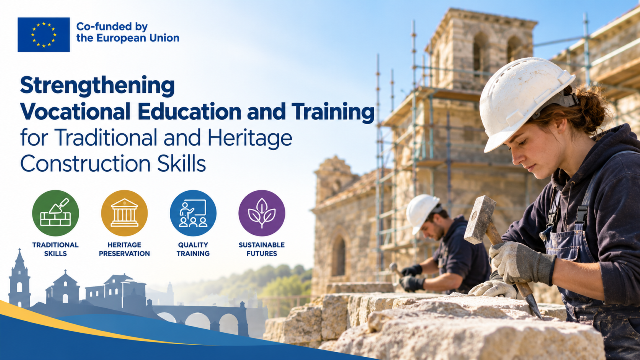
REVIVE+ – Strengthening Vocational Education and Training for Traditional and Heritage Construction Skills
Co-funded by the European Union.
PROJECT DETAILS
- Project number: 2026-1-SK01-KA220-VET-000461588
- Programme: Erasmus+ – Cooperation Partnerships in Vocational Education and Training (KA220-VET)
- Project duration: 1 October 2026 – 31 March 2029 (30 months)
- Project budget: EUR 400,000
- Coordinator: REGIONAL DEVELOPMENT AGENCY SENEC-PEZINOK (RDA-SP)
PROJECT OVERVIEW
The project transforms often informal and fragmented professional know-how into structured, transparent and transferable learning pathways suitable for both initial and continuing vocational education and training. The consortium will develop harmonised professional profiles and competence frameworks referenced to the EQF, national qualification frameworks and ESCO terminology, modular training programmes, methodology for teachers and trainers, and tools for the practical assessment of acquired competences.
The training model will be tested in real-life settings through practical pilot training at cultural heritage sites and a pilot programme within formal vocational education and training. The project will also develop a Moodle-based digital learning environment, engage employers, craft chambers, experts and heritage institutions, and prepare pathways for the future integration of the developed results into national VET systems.
The project also connects cultural heritage conservation with green skills, repair and reuse of existing buildings, the use of natural and traditional materials, lifelong learning and the recognition of skills acquired through non-formal learning and professional practice.